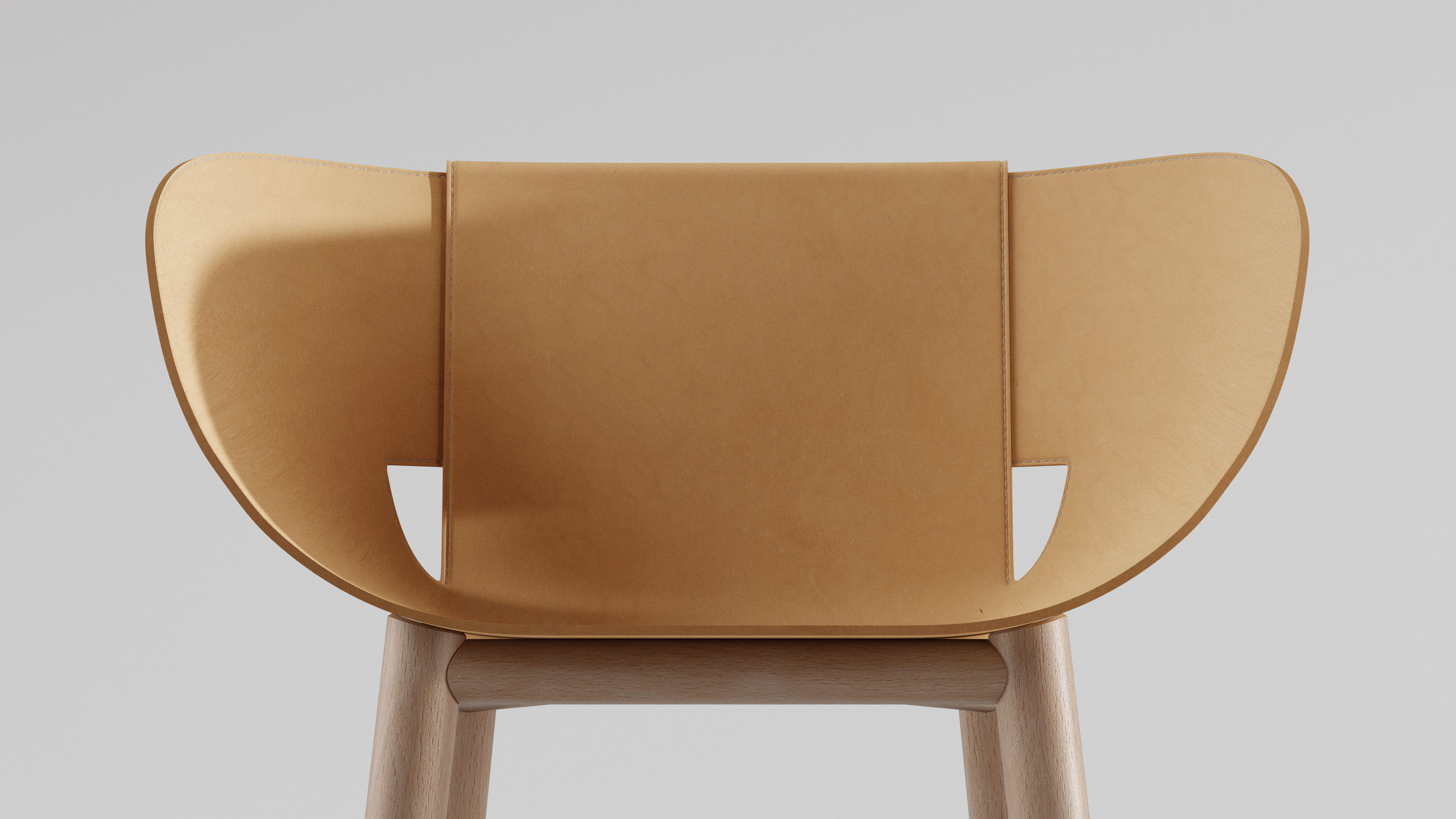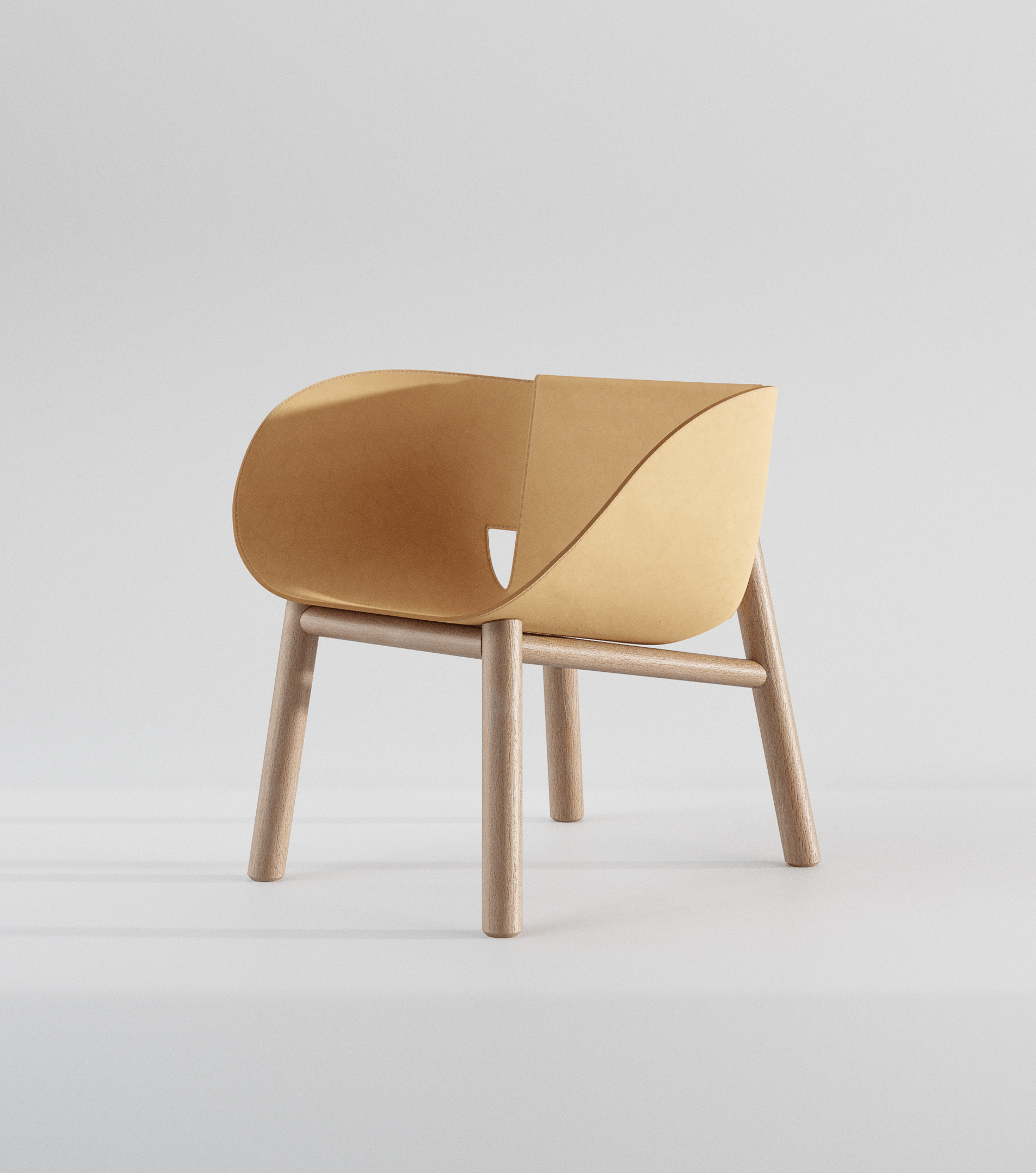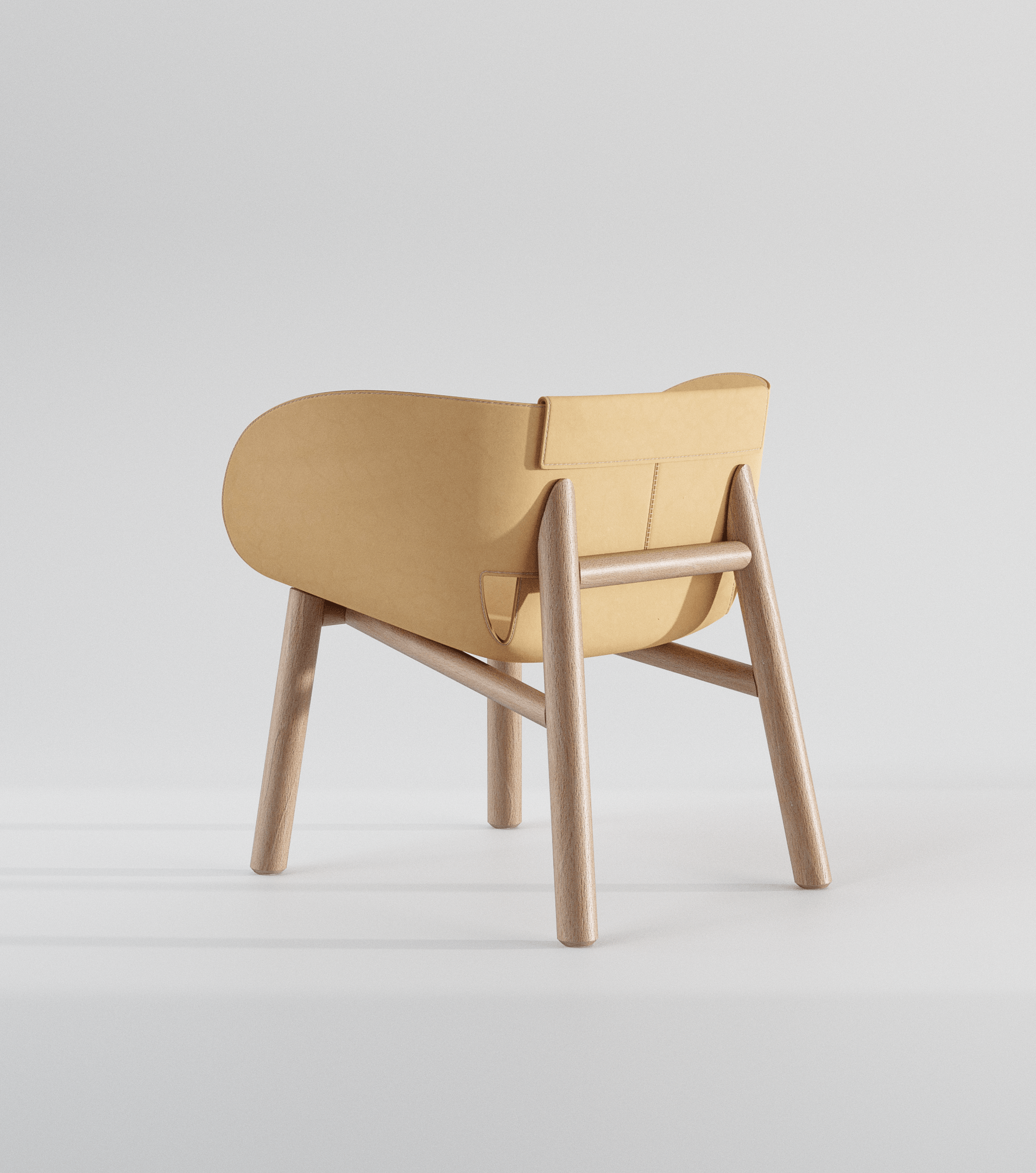
The design of the Oru-Kami armchair is inspired by the ancient Oriental tradition of folding paper (oru-kami, from the Japanese, oru fold and kami paper). Observing that the classic armchair elements tend to be very “heavy”, I thought about how to deconstruct it, making it light.
Inspired by origami, I started playing with a sheet of paper, with folds and cut: I was fascinated by the idea of a two-dimensional element that becomes three-dimensional in a few moves. Paper also evoked qualities such as lightness, simplicity, pliability and essentiality.
After several tests and with the design eye on a comfortable and cosy seat, the final product was born, extremely simple and for this very reason sought after. The shell comes to life from a single sheet of easily assembled material, which makes the production process simple and consequently sustainable, thanks to a limited use of materials and reduced production consumption.
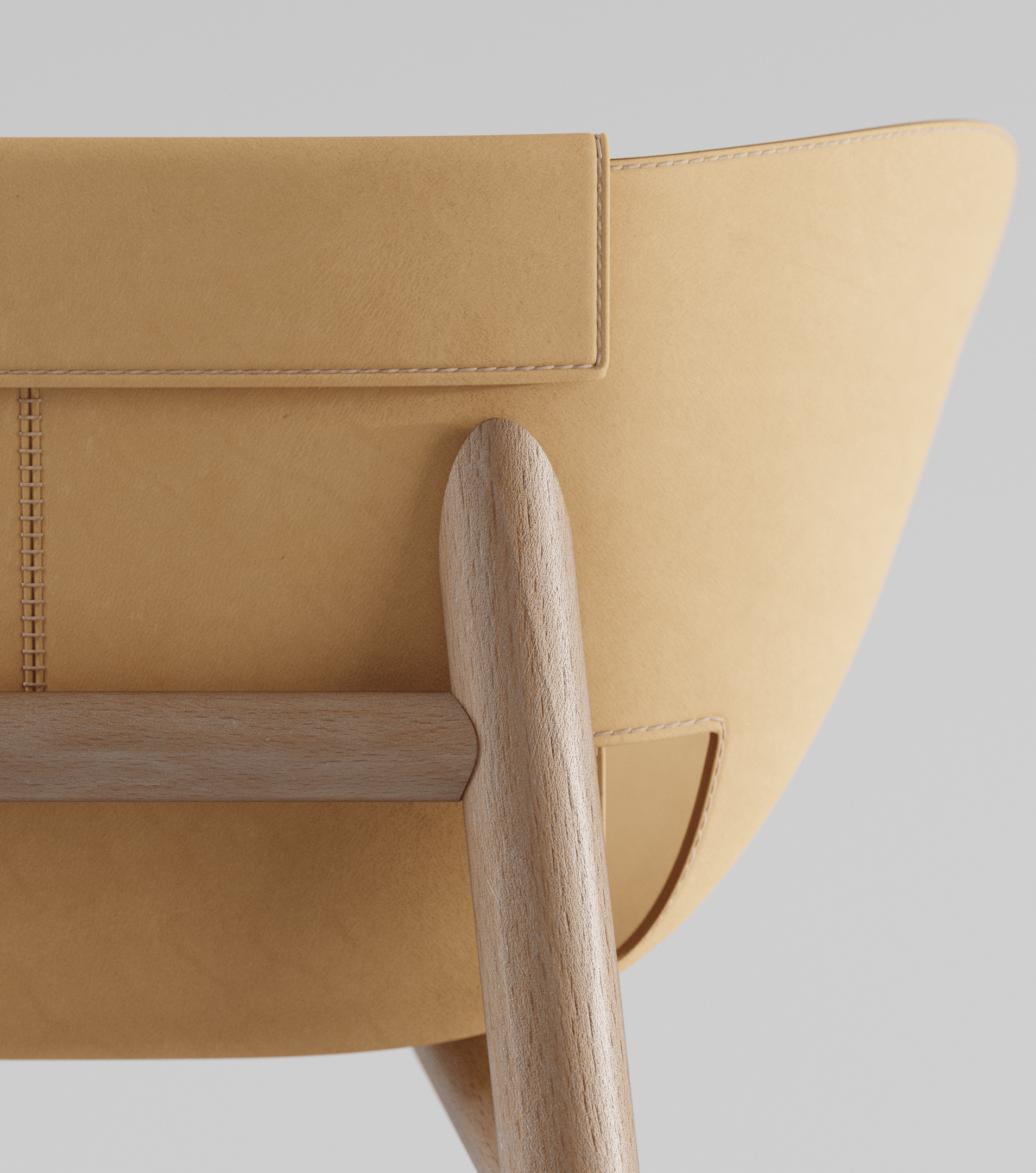
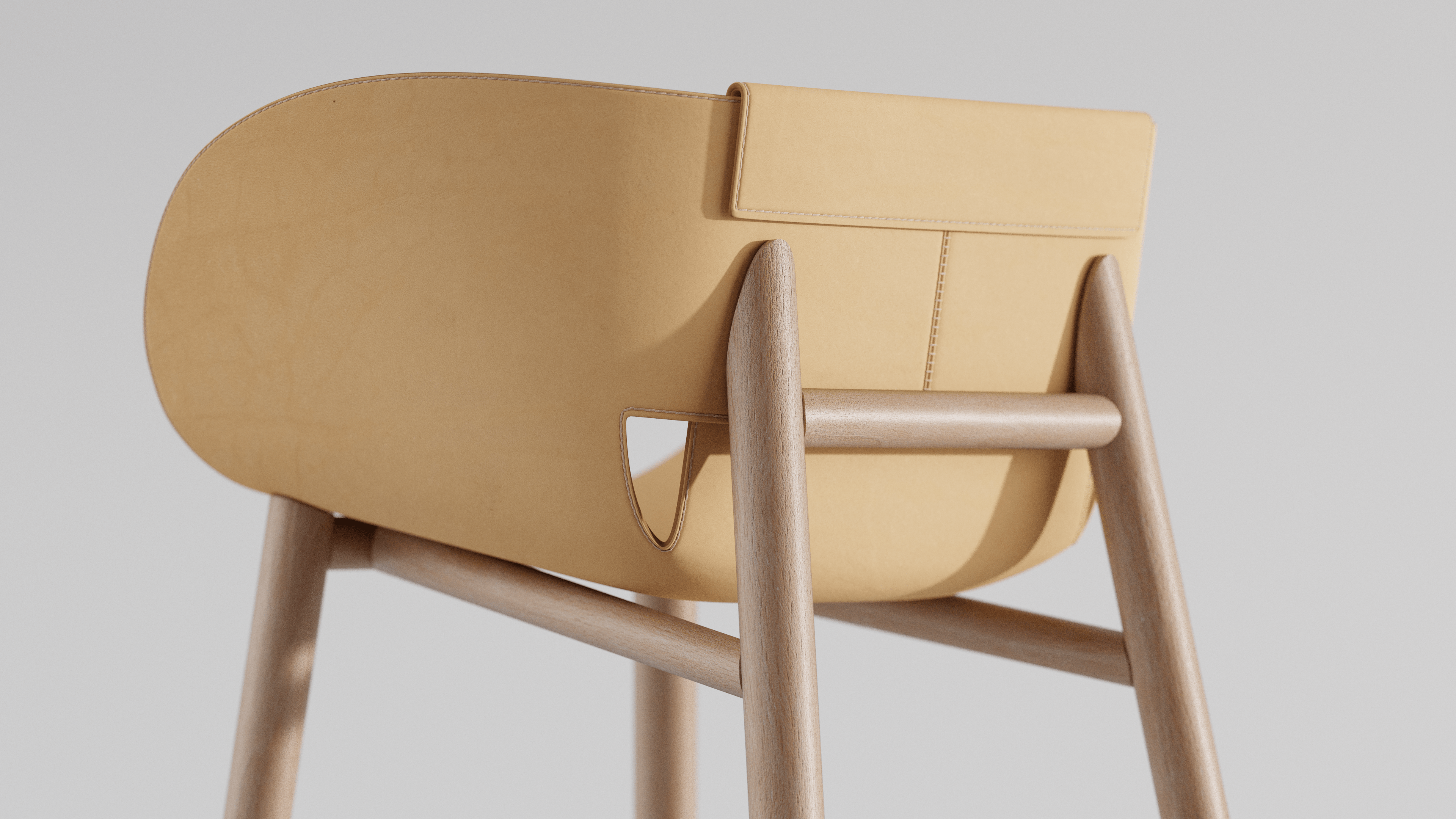
The intuition behind the design of Oru-Kami is to “revolutionise” the production and constituent system of a traditional upholstery. The result is a destructured and lightened armchair, both in terms of workmanship and materials. An essential product that dematerialises and makes the upholstery light. Composed only of a layer of natural leather and a solid core/structure in solid wood, the shell is worked flat and then takes on a three-dimensionality once folded on the frame, to be then supported and stabilised by a play of joints and precise stitching.
Oru-Kami is an armchair that combines design accuracy and environmental responsibility. Spacious and cosy, the wooden structure recalls nordic rigour and an oriental spirit, through an almost primordial combination that reveals the finest details. The shell can be easily removed to allow practical maintenance or replacement. A choice that represents the desire to move in the direction of responsible design.
A comfortable and cosy armchair, in which the solid wood frame with large sections and the ergonomic backrest in natural leather (folded and curved to evoke the Japanese tradition of origami in its sinuous lines) express the mastery of woodworking. In a natural way, soft and clear cut forms find their own balance, with an ergonomic design that is transversal to residential use.
Typology - Furniture
Product - Armchair
Year - 2023